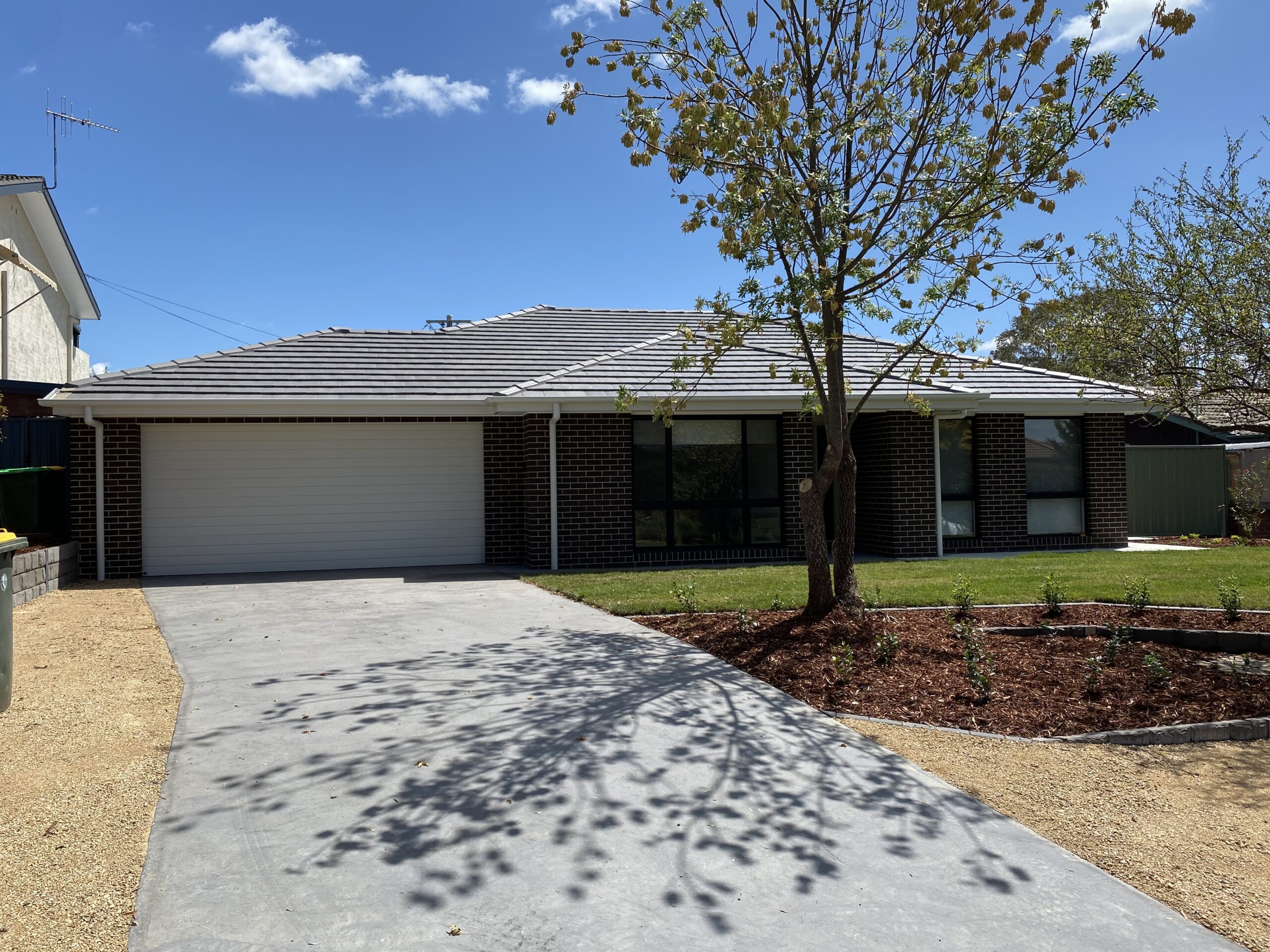
If your Canberra home no longer fits the way you live, you face a choice that shapes the next decade: invest in home renovations, or knock down and rebuild? Both can transform how you live, but they suit different homes, blocks and goals. For homeowners weighing home renovations in Canberra against a full rebuild, this guide sets out the honest trade-offs across the ACT and surrounding NSW, so you can decide which path genuinely fits your situation. Home renovations Canberra homeowners undertake range from modest updates to major reconfigurations — and knowing where that scope tips toward a rebuild is the key to a good decision.
At Upmarket Homes, we have designed and built custom homes across the Canberra region for more than 30 years. While knockdown rebuild is a large part of what we do, our aim here is to help you reach the right decision — not to steer you toward one answer regardless of your circumstances.
At heart, the choice comes down to one thing: whether you keep the existing structure or start fresh. Understanding that difference is the key to everything that follows.
Home renovations retain part of your existing home — its footings, structure and footprint — and work within them, updating, reconfiguring or extending. A knock down rebuild removes the old house entirely and replaces it with a brand-new home designed from a clear site. Renovating keeps what is already there and improves it; rebuilding starts again with no inherited constraints. Neither is universally better. The right choice depends on the condition of your current home, the quality of its original design and orientation, how much you want to change, and how long you plan to stay.
Renovating is the right answer for plenty of Canberra homes, and it is worth being clear about when it shines.
If your home is fundamentally sound — good bones, a sensible layout, decent orientation — and simply feels dated or no longer quite functional, a well-designed renovation can deliver excellent results. Updating a kitchen and bathrooms, opening up living spaces, or adding a considered extension can meaningfully improve how a good home lives without the scale of a full rebuild. Updates like these also suit homes with genuine heritage or character worth preserving, and situations where you want to stage the work over time. If the underlying home is worth keeping, home renovations are often the smarter, more proportionate investment.
Renovations carry real constraints, though, and they are worth facing honestly. You remain bound by the original footprint, structure and orientation — so if the home faces the wrong way for Canberra’s climate, or its layout is fundamentally compromised, the work can only do so much. Opening up an older home also tends to reveal surprises: old wiring and plumbing, footings not built for a second storey, or materials at the end of their life. These unknowns can add complication as the work progresses, which is precisely what a rebuild avoids.
For other homes, a rebuild is the stronger long-term decision, and the signs are usually clear.
If your existing home is well past its best, poorly oriented for the climate, or so ill-suited to your needs that a renovation would mean rebuilding most of it anyway, a knock down rebuild is often the better path. It is especially compelling when you love your location — a tightly held Canberra suburb, an established street, a school catchment — but the house itself simply does not work. A rebuild lets you keep everything you value about where you live while gaining a home built to current standards and designed entirely around your block and your life.
This is where custom design earns its place. A rebuild begins, at Upmarket, as a Custom Design Concept Plan drawn by our in-house team specifically for your block — its slope, aspect and outlook — rather than a template stretched to fit. Because design and construction sit under one roof, the plan is grounded in what can genuinely be built. You can see how design-led thinking shapes our homes in our article on mindful design in our homes, and the full journey in our build process.
If you lean toward renovating rather than rebuilding, a few considerations will shape whether home renovations in Canberra deliver the result you are hoping for. Thinking them through early saves disappointment later.
Before committing to home renovations, look hard at two things a renovation cannot easily change: the home’s orientation to the sun and the soundness of its structure. If the house faces well for Canberra’s climate and its bones are solid, a renovation has a strong foundation to build on. If it faces poorly or the structure is tired, those limitations will follow the finished renovation, and a rebuild may serve you better in the long run.
The most successful home renovations are proportionate to the home. Updating kitchens and bathrooms, reworking a living zone, or adding a considered extension suits a fundamentally good home. Once the wish list grows to the point of reconfiguring most of the house, the balance tips toward a rebuild — because you end up paying to work around an old structure rather than starting clean.
Older Canberra homes commonly reveal surprises once opened up — wiring, plumbing, footings and materials at the end of their life. Good planning for home renovations allows for this, both in expectations and in sequencing the work. A builder with local experience across the ACT and NSW will anticipate what a home of a given era is likely to hold.
Setting the two side by side helps clarify the decision beyond a simple structure-or-not distinction.
On design freedom, a rebuild wins decisively — a clear site imposes no inherited constraints, while updating always designs around what remains. On disruption, both are significant projects, though a live-in project can be disruptive in a different way to a rebuild you relocate for. On certainty, a rebuild carries fewer structural unknowns than opening up an old home. On preserving character, a renovation keeps what a rebuild necessarily removes. And on the long view, a rebuild delivers a home built entirely to current standards for comfort and efficiency, whereas the work improves a home that remains, at its core, of its original era. Weighing these against your own priorities is how you find your answer.
Budget naturally forms part of this decision. In keeping with our approach we do not quote figures in our content — the right step is to book a consultation so we can talk through your specific situation directly.
Whichever path you choose, Canberra’s climate should shape the design — and it is one of the strongest arguments for a rebuild when orientation is the problem. Canberra summers are hot and dry, winters are properly cold, and energy-efficient design is a genuine liveability issue here, not a nice-to-have. Crucially, real efficiency must be designed in, and it is largely determined by orientation — which a renovation can rarely change.
Upmarket are GreenSmart professionals. GreenSmart is the Housing Industry Association’s environmental initiative, and GreenSmart Professionals are trained in sustainable, energy-efficient building and design practices. In practice we apply passive solar design principles: orienting living areas to the northerly aspect to capture winter sun, sizing and placing windows to keep summer heat out, and designing for cross-ventilation. A rebuild starts with a clear site, so we can orient the whole home to work with the climate — the single biggest efficiency lever, and often the one a renovation cannot pull. Our designers look to maximise the home’s energy rating through the assessment process, delivering comfort year-round and a home that is easier to run over its lifetime.
Whichever way you are leaning, this is a decision worth taking time over, because it shapes how you live for years to come. The homeowners who are happiest with their choice — whether they renovated or rebuilt — are almost always the ones who started with an honest look at their home’s bones, their block’s orientation, and how long they intend to stay. Get those three things clear, and the right path usually reveals itself.
The value of an experienced local builder here is not just in the building but in the advice: a builder who works across both renovation-scale projects and full rebuilds, and across both the ACT and NSW, can give you a straight assessment of what your specific home and block are best suited to. That honest guidance at the outset is often worth more than any single feature of the finished home.
Whether your project is a renovation-scale rethink or a full rebuild, the builder you choose shapes the result. It is worth choosing on substance and track record.
Upmarket Homes brings more than 30 years of building across the ACT and surrounding NSW, an in-house design team that designs each home around its block, GreenSmart-professional expertise for a home suited to the local climate, HIA membership, in-house quality control at every stage, and a Site-Start Guarantee that gets us on site within four weeks of plan approval. Our homes are backed by a 6-year structural guarantee and a 90-day maintenance period after handover. If you are still comparing builders, our guide on what to look for in a custom home builder is a useful starting point, and you can see the standard of our finished homes in our gallery.
There is no universal winner in the home renovations versus rebuild question — only the right answer for your home, your block and your plans. If your home has good bones and simply needs updating, a renovation may be the proportionate, sensible choice. If it is poorly suited to your needs or the climate, and you love where you live, a knock down rebuild is often the stronger long-term investment. The best way to decide is an honest feasibility conversation about your specific situation.
If you would like help weighing up home renovations against a rebuild for your Canberra home, we would love to talk it through. Book a consultation with our team and take the first step toward a home that’s as individual as you are.